
It’s mid-winter. You wake up tired, even after eight hours of sleep. You have a persistent, dull headache that sits behind your eyes. Your focus drifts, and you feel a general sense of malaise that you just can’t shake.
You’ve probably told yourself it’s just “the winter blues,” Seasonal Affective Disorder (SAD), or simple cabin fever from being cooped up inside. But what if the feeling of being “stuck inside” isn’t just psychological?
For many homeowners, that heavy, lethargic feeling is actually a physical reaction to the environment. According to the Consumer Product Safety Commission (CPSC), indoor air levels of many pollutants may be 2-5 times, and occasionally more than 100 times, higher than outdoor levels. When the weather turns cold, we seal our homes tight to conserve heat. In doing so, we inadvertently turn our living spaces into airtight containers, trapping pollutants, biological contaminants, and moisture.
If you have been scouring online forums or subreddits like r/ToxicMoldExposure looking for answers to why you feel so drained, you aren’t crazy. The air you are breathing might be the culprit
Stale Air in House Winter
In the summer, we open windows and doors, allowing a cross-breeze to flush out indoor pollutants. In the winter, that ventilation stops.
Modern homes are built to be energy efficient, which is great for your heating bill but terrible for indoor air quality if not managed correctly. This creates what the Department of Energy calls “The Stack Effect”.
When you smell “stale” air, you aren’t just smelling old air; you are breathing in a concentrated cocktail of:
- VOCs (Volatile Organic Compounds): Off-gassing from carpets, paint, cleaning supplies, and furniture that usually dissipates is now trapped.
- Biological Contaminants: Pet dander, dust mite waste, and mold spores that circulate through your heating system.
- Human Bio-Effluents: Yes, simply breathing in a closed room raises CO2 levels.
When the air is stale, your lungs have to work harder to extract oxygen, and your liver has to work harder to filter out airborne toxins. The result? That heavy, unmotivated, “stale” feeling.
Sick Building Syndrome Symptoms
Have you ever noticed that your headache clears up 30 minutes after you leave the house to run errands, only to return the moment you walk back through your front door? This is the hallmark of Sick Building Syndrome (SBS).
According to the National Institutes of Health (NIH), SBS is a condition where residents experience acute health effects that appear to be linked to time spent in a building, but no specific illness or cause can be identified by a general doctor visit.
Common symptoms include:
- Neurological: Brain fog, difficulty concentrating, fatigue, and irritability.
- Respiratory: Dry cough, throat irritation, and sinus congestion.
- Physical: Dry or itchy skin, eye irritation, and unexplained headaches.
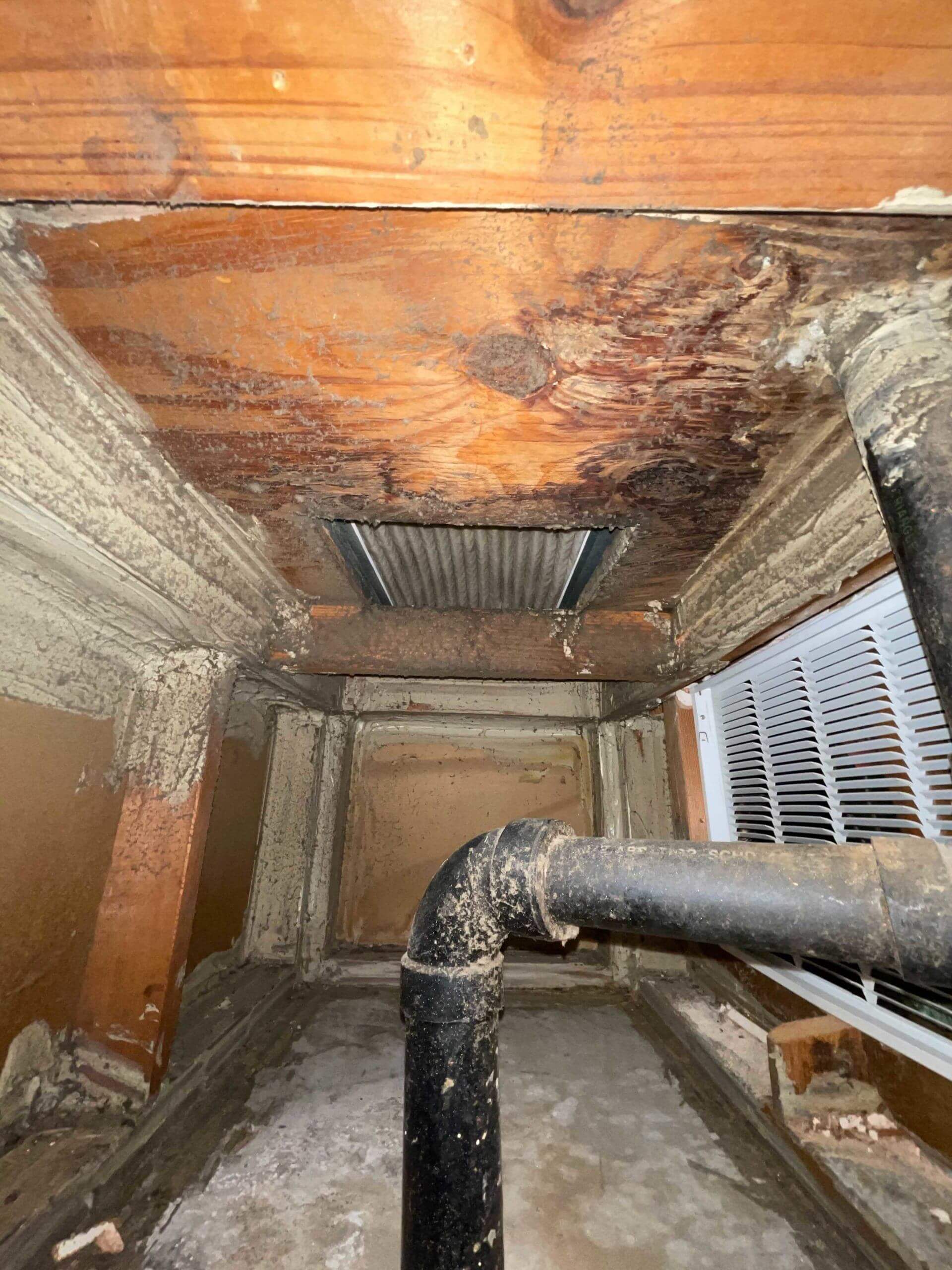
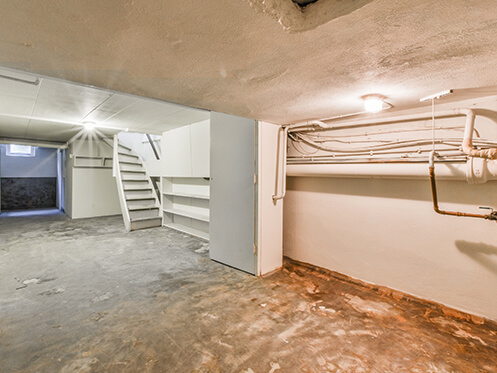
In the winter, the “stack effect” pulls air from your crawlspace or basement up into your living areas. If there is hidden mold growth in those lower levels—even if you can’t see it—the mycotoxins and spores are being drawn right into the air you breathe while you sleep.
“When homeowners call us because they’re experiencing health issues and suspect mold, I always tell them to trust their instincts. Your health is too important to risk. It’s always better to be safe than sorry when it comes to potential mold exposure—a quick inspection can give you the peace of mind you need.”
-Zak Khoshbin, Pur360
CO2 vs Mold Symptoms
Distinguishing between high Carbon Dioxide (CO2) levels and mold exposure can be tricky because both cause fatigue, but there are distinct differences to look out for.
High CO2 Symptoms:
- The Signs: Sleepiness, “heavy eyelids,” and feeling slow or sluggish.
- The Cause: Poor ventilation in bedrooms or home offices with doors closed. Studies have shown that CO2 levels above 1,000 ppm can cause measurable reductions in cognitive performance.
- The Fix: Opening a window for 10 minutes usually clears the head immediately.
Mold & Mycotoxin Symptoms:
- The Signs: An “active” fatigue. You aren’t just sleepy; you feel inflamed.
- Specifics: Joint pain, sudden mood swings/anxiety, metallic taste in the mouth, electric shock sensations, or new sensitivities to foods and fragrances.
- The Pattern: Opening a window helps slightly, but the symptoms persist because the spores are embedded in your HVAC system, carpets, and furniture.
Many people suffering from mold toxicity report a “vibrating” internal anxiety or a brain fog that feels like they have been drugged. Research published in PubMed supports this, linking mold inhalation to innate immune activation that can cause neural, cognitive, and emotional dysfunction.
See the Difference: Real Results in Chicago
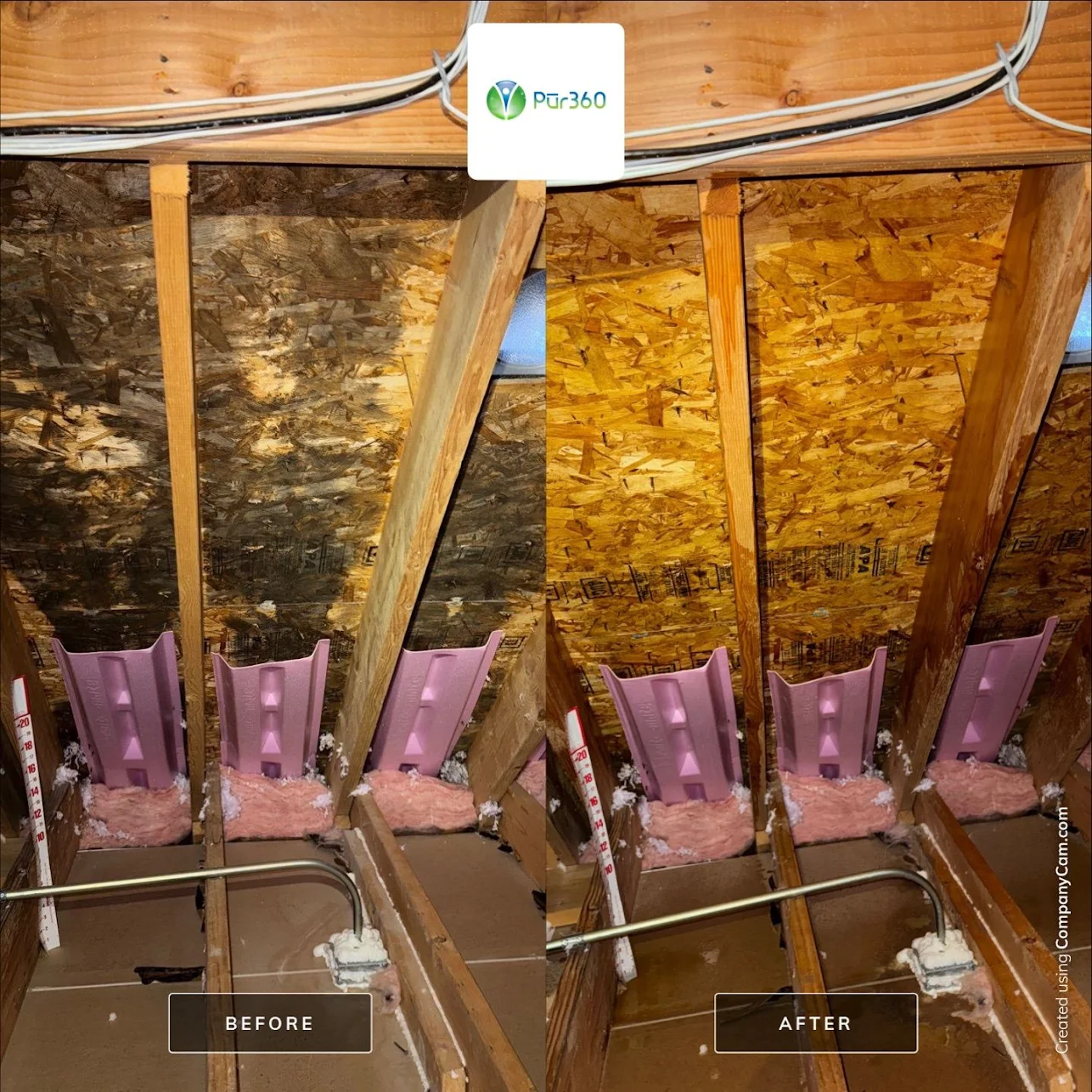
Winter condensation often hits attics the hardest, creating hidden mold growth on the sheathing that homeowners rarely see until it becomes a major problem. We recently helped a family in Chicago who were suffering from unexplained respiratory issues during the colder months.
The image below shows the condition of their attic before and after our treatment. Using our patented, chemical-free process, we were able to completely eradicate the mold without tearing out the insulation or replacing the roof, restoring healthy air quality to the home in a fraction of the time of traditional remediation.
Get Clarity and Peace of Mind
You shouldn’t have to dread being in your own home. If you are experiencing persistent fatigue, brain fog, or respiratory issues that only seem to happen indoors during the winter, it is time to investigate your air quality.
Don’t guess, and don’t rely on DIY solutions that might make the problem worse.
Call Pur360 today for a free consultation. We can help you determine if your winter blues are actually a symptom of your environment and offer a chemical-free, 100% safe eradication solution to get you breathing easy again.
Frequently Asked Questions
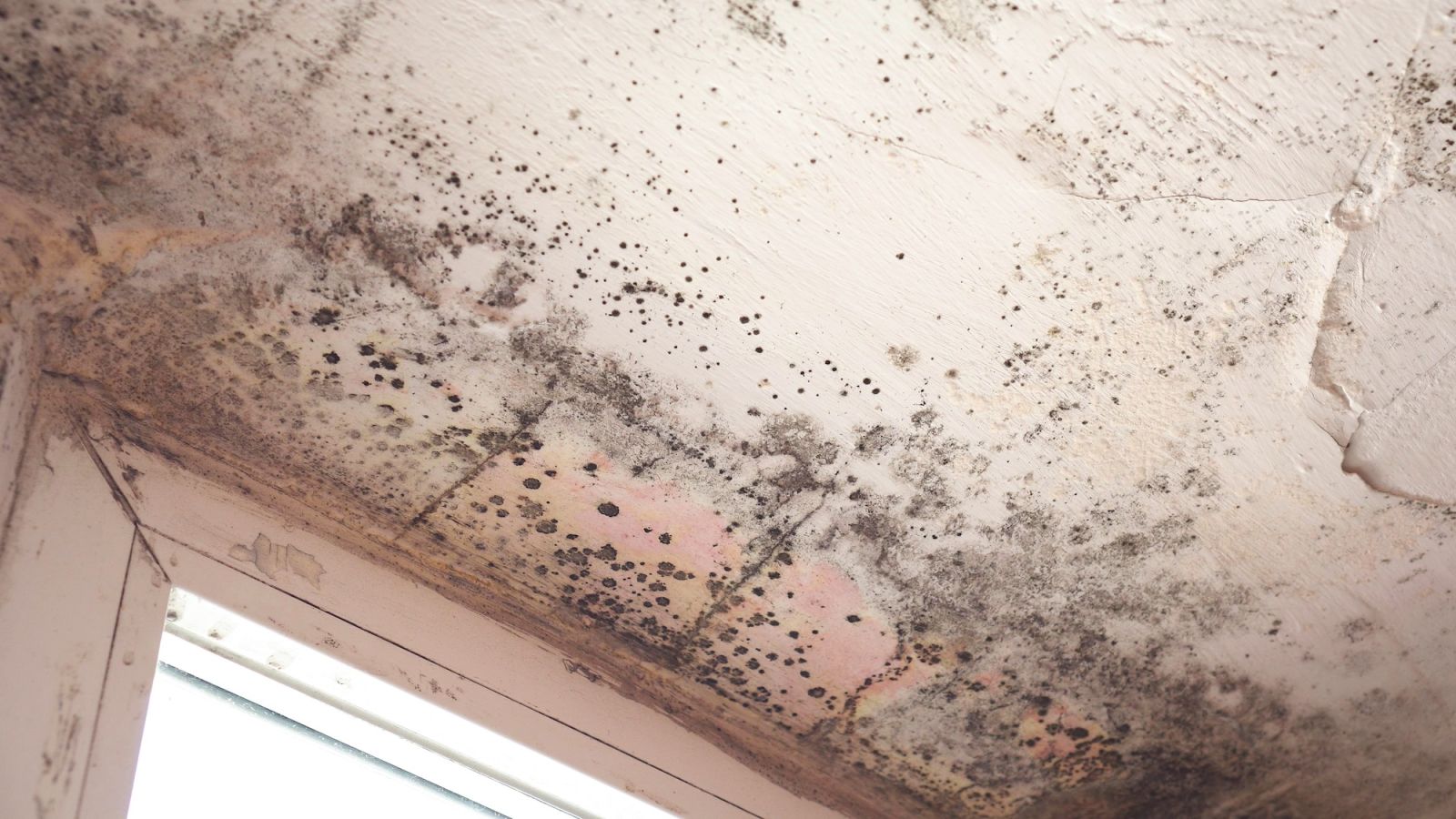
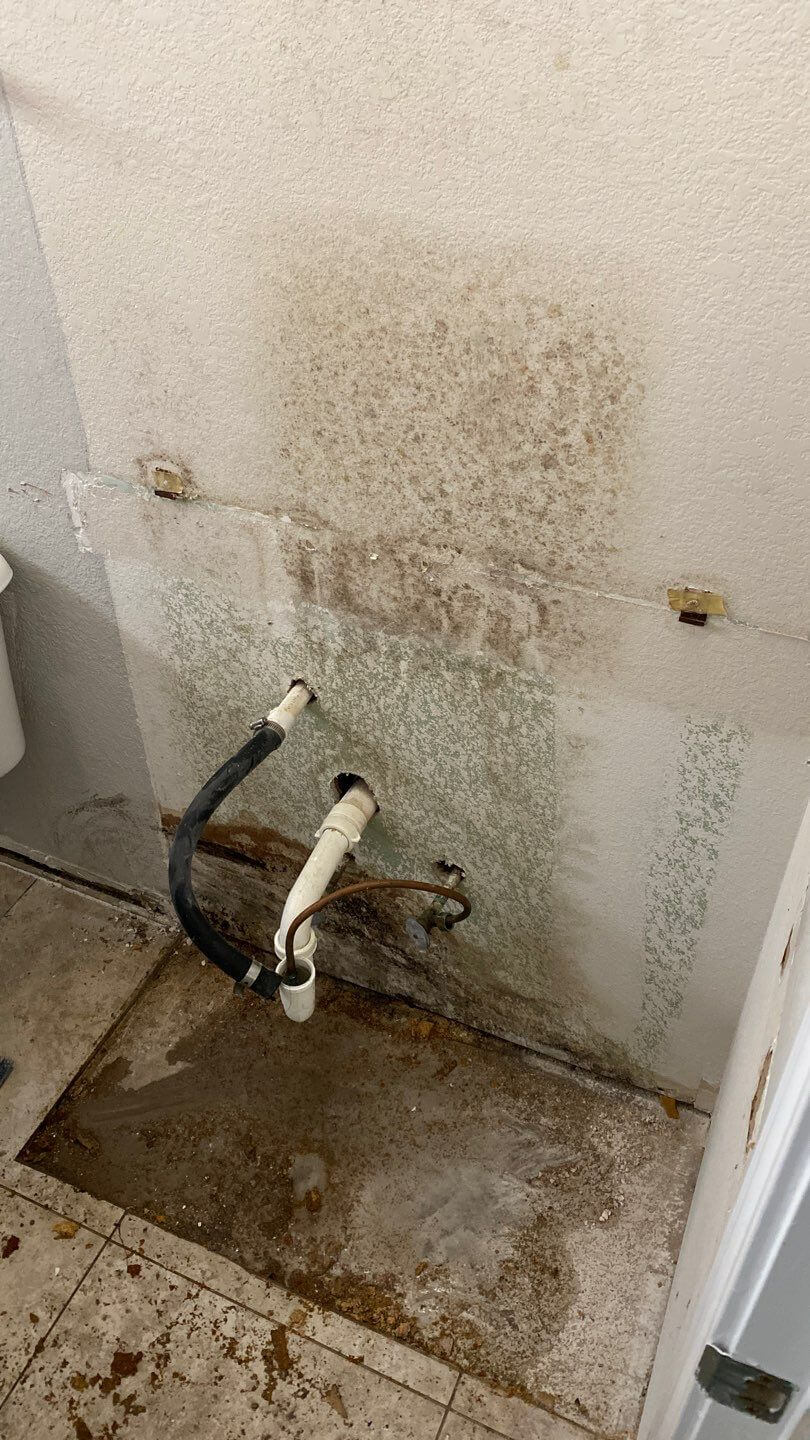
Q: Can a house make you sick even if you don’t see mold? A: Yes. Mold often grows behind drywall, under floorboards, or in HVAC lines where condensation gathers in winter. You do not need to see the colony to breathe in the spores and mycotoxins it releases.
Q: Will an air purifier fix winter brain fog? A: A HEPA filter can help reduce the particle count, but it cannot kill the source of the mold or eliminate mycotoxins that have settled into porous surfaces. If you have an active moisture issue or hidden growth, a purifier is just a band-aid.
Q: Why do my symptoms feel worse in the morning or at night? A: This is common for two reasons. First, we spend 8 hours motionless in the bedroom, often with the door closed, which concentrates pollutants. Second, if your mattress or pillows have absorbed dampness or spores over time, you are breathing them in at close range all night.
Q: My house is dry and my skin is cracking. Can mold still grow in low humidity? A: Yes. While the ambient air in your living room might be dry due to heating, “micro-climates” of moisture can exist inside walls, around windows, or in attics where cold outdoor air meets warm indoor air. This condensation provides enough water for mold to thrive, even if your hygrometer reads 30%.
Q: How long does it take to feel better after professional remediation? A: While everyone’s body detoxes differently, many clients report that the specific “heaviness” in the air lifts immediately after our sanitization process. Physical symptoms like headaches and sinus congestion often begin to improve within days once the continuous exposure to the toxin stops.
Medical Disclaimer: The information provided in this article is for educational purposes only and does not constitute medical advice, diagnosis, or treatment. Pur360 is a professional mold remediation and sanitization service, not a healthcare provider. While improved air quality often leads to improved well-being, we cannot guarantee specific health outcomes. If you are experiencing persistent or severe health symptoms, please consult with your primary care physician or a qualified medical professional immediately.