
Crawl spaces are mostly out of sight, out of mind. That is, until a home inspector finds mold during a sale, an HVAC tech mentions a musty smell, or someone in the family develops mystery allergy symptoms that won’t go away. By the time most homeowners learn there’s mold under the house, it’s usually been growing for a while.
Why crawl spaces are mold magnets
A crawl space is the ideal mold habitat: dark, poorly ventilated, naturally humid, and full of organic material (wood joists, subfloor, kraft-faced insulation, sometimes cardboard the previous owner stored down there). The EPA’s Brief Guide to Mold, Moisture, and Your Home notes that mold needs only three things to grow indoors: moisture, organic material, and a temperature between roughly 40°F and 100°F. A typical crawl space has all three, year-round.
Signs you have crawl space mold
The smell test
If your house smells musty in the morning, or one part of the first floor smells like an old basement, you almost certainly have crawl space mold or moisture. According to the CDC, the musty odor itself is a sign of mold even when no growth is yet visible. It’s caused by microbial volatile organic compounds (MVOCs) released as mold metabolizes its food source.
What you might feel before you see anything
- Persistent allergy symptoms that don’t track with pollen season
- First-floor rooms that feel humid even when the AC is running
- Hardwood floors that have started cupping or buckling
- Cold floors above the crawl space (a sign that insulation has fallen or absorbed moisture)
What you (or a home inspector) might see
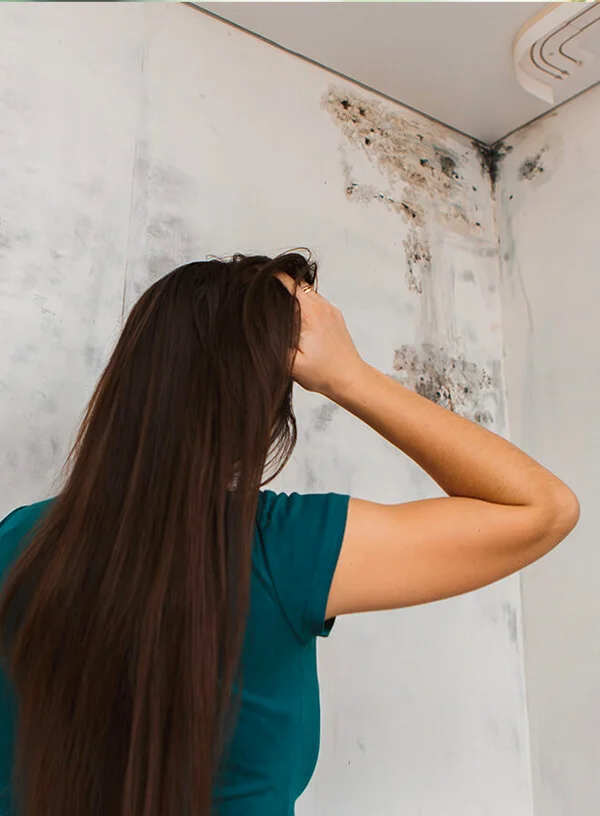
- White, gray, or black fuzzy growth on floor joists or subfloor
- Insulation that’s sagging, stained, or sitting on the ground
- Standing water, even small puddles, on the dirt or vapor barrier
- Rust on metal supports, plumbing straps, or HVAC ducts
- Visible efflorescence (white mineral crust) on foundation walls — evidence of past water intrusion
Is crawl space mold actually dangerous?
Yes, and not for the reason most people think. The risk isn’t that you go in the crawl space. The risk is that you don’t have to. Roughly 40% of the air on the first floor of a typical home originates in the crawl space, a phenomenon known as the stack effect. Air rises up through gaps around plumbing penetrations, electrical chases, and the subfloor itself. Whatever is growing or off-gassing under the house ends up in the air your family breathes.
The American Academy of Allergy, Asthma & Immunology tracks reactions to indoor mold exposure: chronic congestion, sneezing, coughing, wheezing, headaches, and worsening asthma. Multiple people in the same house developing the same symptoms is a strong tell.
“I’d gotten the news that any homeowner hates to hear: mold in the basement. A panicky Google search tells me that this is going to cost me quite a bit but a quick and easy phone call to Pur360 tells me otherwise.
“Within minutes I was scheduled for an inspection for the following day. Then, as if that couldn’t be any better a get a call asking if they could come earlier. THEN, the technician who comes by manages to put me at ease, cheer up my infant daughter, and calmly assures me that this is going to be far, far easier then I feared.
“I gotta say that I was entirely won over. Pur360 is a superb company and I can’t recommend them often enough. They turned a call that I had been dreading into a great experience.”
— Google review from Pur360 customer in the Chicago area
How professional crawl space mold removal actually works
A trained crew will follow the IICRC S520 standard for professional mold remediation. A crawl space job is harder than a basement or bathroom job for one reason: you can’t fix the mold without first fixing whatever is keeping the crawl space wet. Skip the moisture step and the mold will be back within a year.
Step 1 — Inspection and moisture mapping
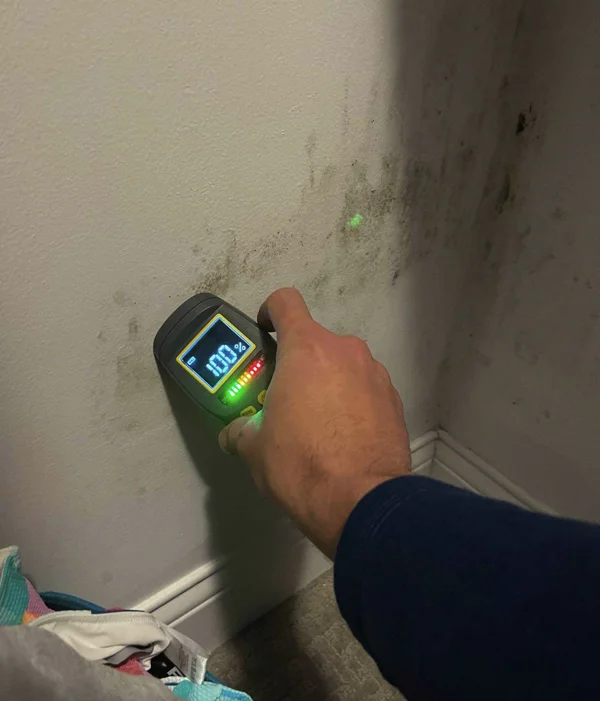
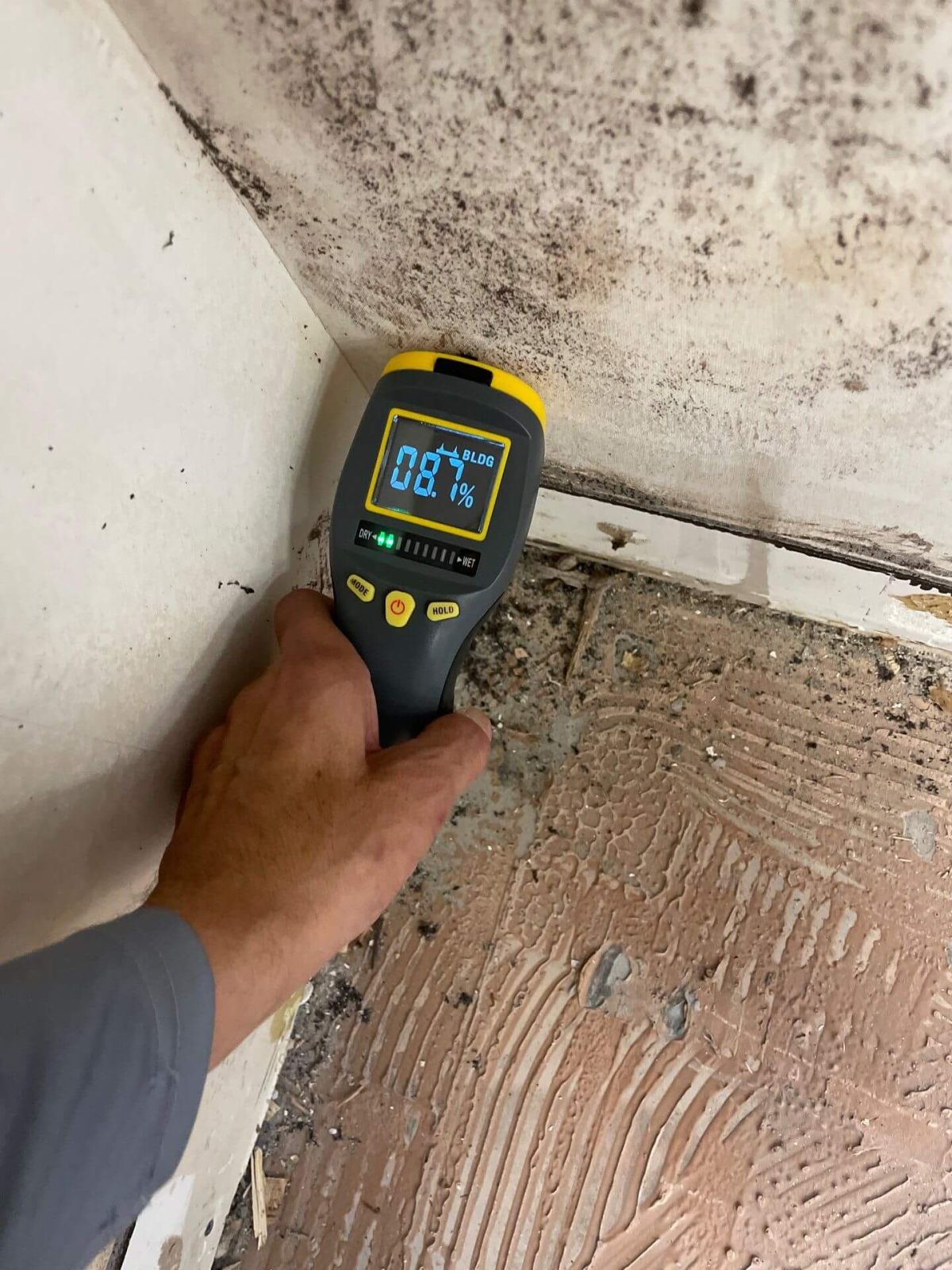
A technician documents the affected area, takes moisture readings on the joists and subfloor, identifies the water source(s), and checks for structural damage. This visit also flags rodent or pest activity that often coexists with crawl space mold.
Step 2 — Source repair (the step most contractors skip)
Before any mold work begins, the moisture problem is corrected: foundation cracks sealed, plumbing leaks fixed, gutters extended, grading reviewed, vents sealed (in conditioned crawl space designs), or a sump pump installed if there’s bulk water. Pur360 will not sign off on a remediation if the moisture source isn’t addressed first.
Step 3 — Mold removal and antimicrobial treatment
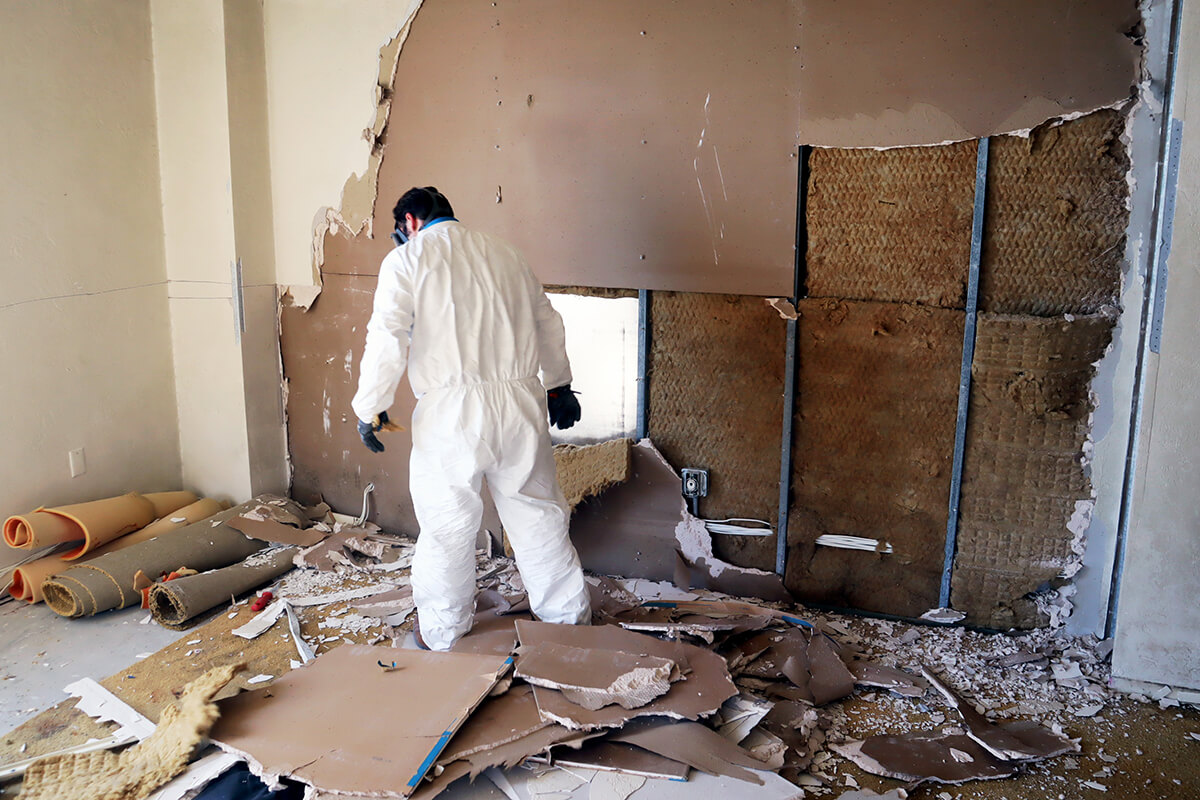
Affected insulation, vapor barrier, and any other porous material is removed and bagged. Joists, subfloor, and other framing are HEPA-vacuumed and treated. Pur360’s chemical-free, oxidative treatment breaks mold structures and the MVOCs that cause the smell, without leaving bleach residue or harsh fumes that traditional remediation can leave behind.
Step 4 — Encapsulation and prevention
A new heavy-mil vapor barrier is installed over the dirt floor and up the foundation walls. In humid climates, a dedicated crawl space dehumidifier is added and the vents are sealed (the conditioned crawl space approach — the EPA-recommended method in most climates south of the Mason-Dixon line). The crawl space is then post-verified and a written certificate is issued.
How much does crawl space mold removal cost in 2026?
Crawl space mold removal typically runs $1,500 to $8,000, with most homeowners spending $2,500–$5,500. Pricing is based on hundreds of Pur360 mold removal projects in major metros throughout the US — from Chicago to Tampa to San Antonio. Pricing varies based on geography and a number of other variables:
- Square footage of the crawl space
- How accessible it is (a 24-inch entry hatch is much harder than a walk-down door)
- Whether insulation has to be removed and replaced
- Whether a moisture source has to be repaired (sump pump, foundation crack, drainage)
- Whether full encapsulation is included (plan for $3–10 per square foot of crawl space floor)
Most homeowners insurance policies do not cover crawl space mold remediation, because the moisture cause is almost always classified as gradual or maintenance-related rather than a sudden, covered loss. Always confirm with your carrier before assuming coverage.
Can you remove crawl space mold yourself?
Generally, no. Two reasons:
- Crawl spaces almost always exceed the EPA’s 10-square-foot DIY threshold by the time mold is visible.
- Working in a tight, contaminated space without proper PPE, containment, or HEPA filtration risks pulling more spores into the rest of the house through the stack effect described above.
If you’re determined to try a small surface clean, the EPA’s Mold Cleanup in Your Home guide outlines the precautions: full-face respirator, sealed Tyvek suit, gloves, and a way to bag and remove materials without contaminating living areas. For most homeowners, a one-visit professional treatment is faster, safer, and not much more expensive (considering the cost of equipment and a wasted weekend).
Keeping crawl space mold from coming back
The HUD Healthy Homes program recommends keeping crawl space humidity below 60% relative humidity year-round. Practical checklist:
- Run a dedicated crawl space dehumidifier sized for the cubic footage
- Maintain a sealed, full-coverage vapor barrier (12-mil minimum, taped at all seams)
- In humid climates, consider conditioning the crawl space — sealing vents, insulating walls, and adding a small supply register from the HVAC system
- Make sure gutters discharge at least 6 feet from the foundation
- Re-grade soil so the ground slopes away from the house on all sides
- Inspect the crawl space twice a year — spring and fall
Why homeowners and realtors choose Pur360 for crawl space mold
Pur360 specializes in fast, chemical-free mold and odor removal in more than a dozen markets across the US. Most jobs are completed in 24 hours and backed by a 100% guarantee. Pur360 also issues mold-free certificates accepted by buyers, agents, and lenders. (Learn more about our Realtor Program.)
“A crawl space is the lungs of your home — whatever’s down there ends up in the air your family breathes. That’s why we don’t sign off on a job until the moisture source is fixed, the materials are dry, and the air tests clean. Cheaper isn’t cheaper if you’re calling someone back in twelve months.”
— Zak Khoshbin, President, Pur360
Schedule a free crawl space inspection
Request a free Pur360 inspection or call 888-478-7360. We service Chicago, Madison, Milwaukee, Indianapolis, Philadelphia, Orlando, Tampa, San Antonio, Austin, Dallas, Fort Worth, and Houston — see our full list of service areas.