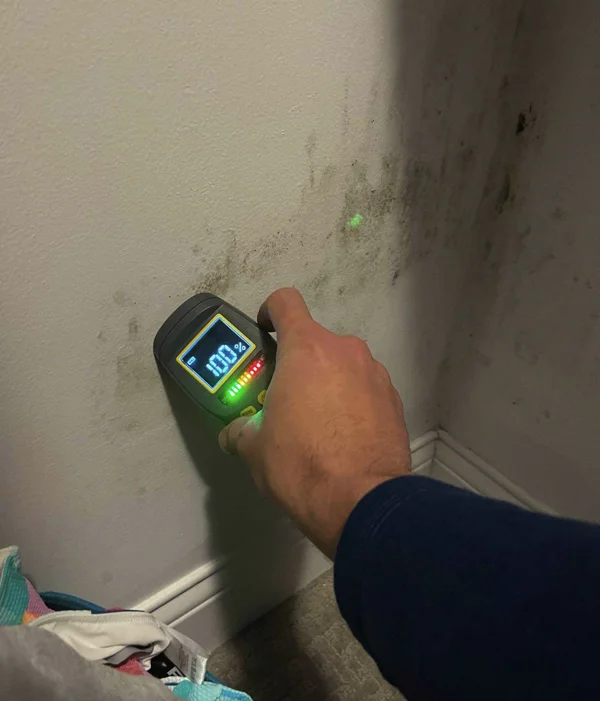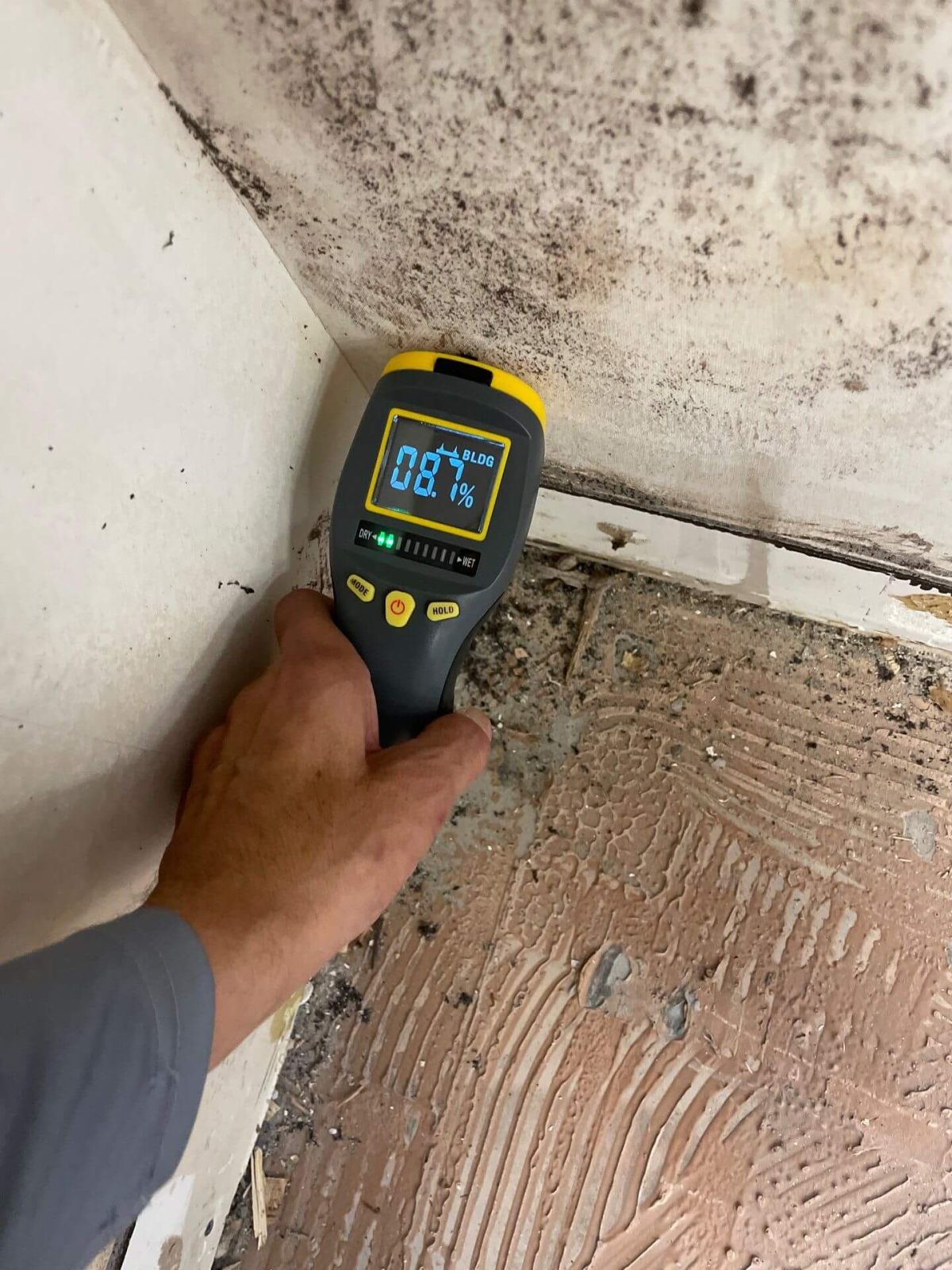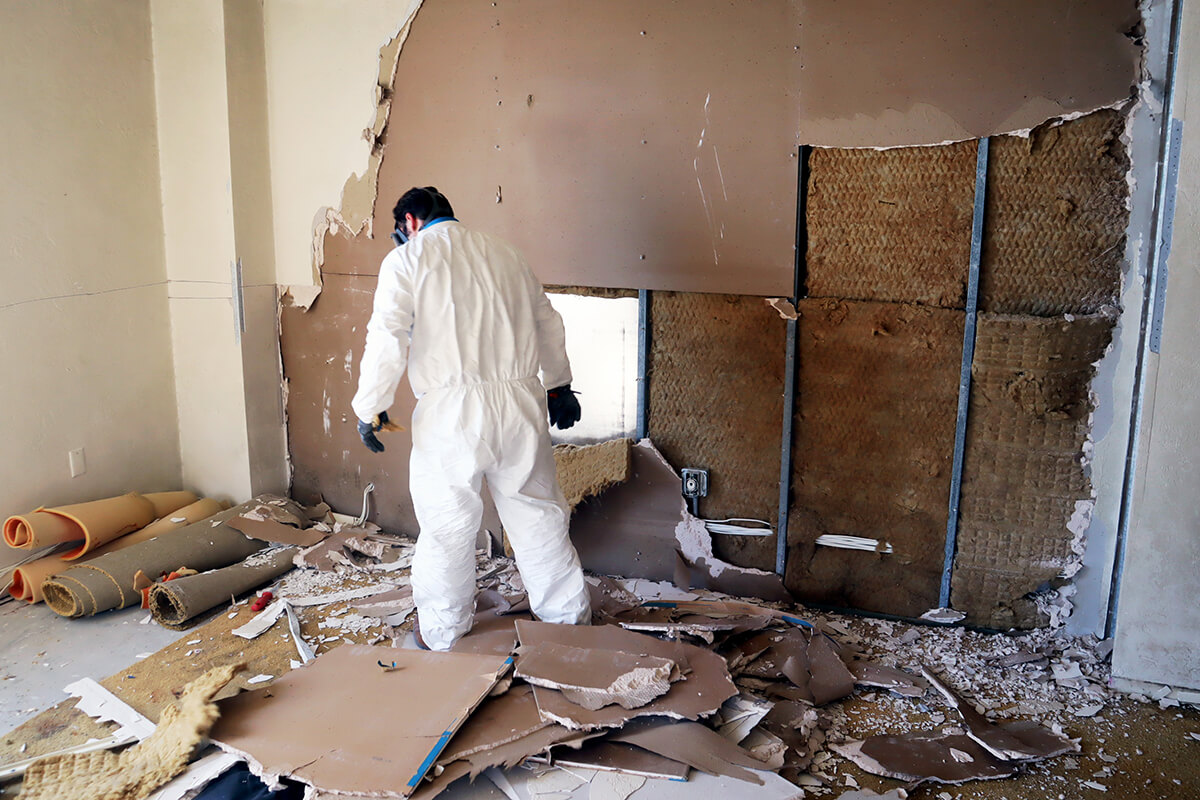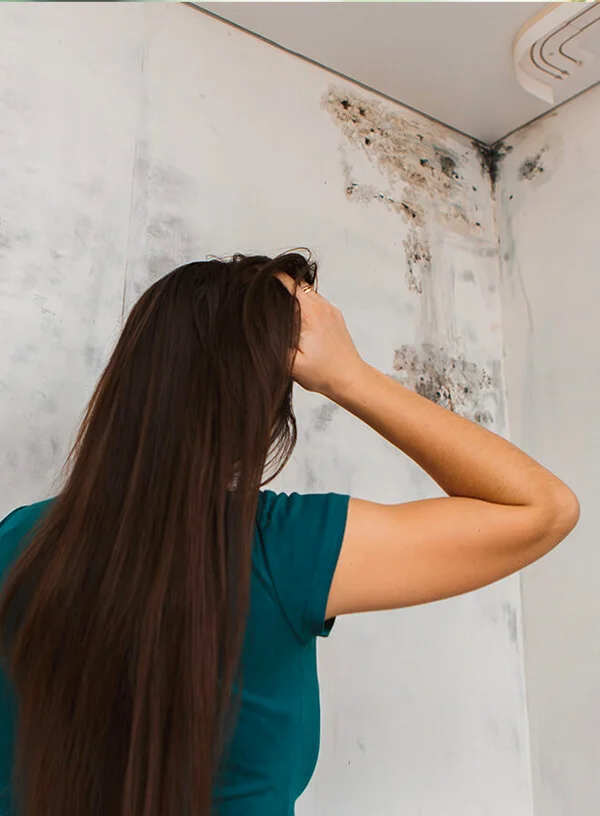

If you’ve spotted mold in your home, your first instinct may be to grab a bottle of bleach. It’s cheap, likely already in your laundry room, and has been marketed for decades as a general-purpose disinfectant.
But when it comes to mold, specifically, the Environmental Protection Agency (EPA) and Centers for Disease Control (CDC) explicitly recommend against using it as a cleanup tool. The chlorine ions that actually kill mold can’t penetrate porous materials like drywall, wood, or insulation, which is where mold takes root.
In fact, the water in the bleach formulation can actually re-wet those materials and feed mold regrowth.
And even when the bleach kills surface mold, the dead spores remain allergenic, meaning the health risk doesn’t disappear just because the stain does.
Killing mold and removing mold are two very different things and serve as the foundation of every credible remediation standard. It’s also why a bottle of bleach rarely solves the underlying problem, no matter how clean the surface looks afterward.
The full story of why bleach falls short as a go-to mold killer (and what actually works!) starts with what the EPA’s own guidance recommends.
What the EPA Actually Says About Using Bleach for Mold Cleanup
Quick answer: The EPA doesn’t recommend bleach as a routine method for mold cleanup. The agency’s official guidance focuses on physically removing the mold and fixing the moisture source that caused it.
That’s because killing mold and solving a mold problem aren’t the same thing.
The EPA published two foundational documents on the subject: A Brief Guide to Mold, Moisture and Your Home for homeowners, and Mold Remediation in Schools and Commercial Buildings for professionals.
The agency’s argument that bleach is “not recommended as a routine practice” during mold cleanup rests on three points:
- Killing mold isn’t the same as removing it. The EPA’s strongest argument is that dead mold is still allergenic, and some dead species are potentially toxic. A bleached surface may look clean, but the spores embedded in wood fibers, drywall, or insulation remain. Those spores can trigger respiratory symptoms, allergic reactions, and potentially more serious health effects.
- Moisture control is the real fix. Mold can’t grow without water, which means any cleanup that doesn’t address the underlying water source is temporary by definition. New mold returns to the same spot, often within weeks. This is why the EPA’s remediation framework starts with finding and fixing the leak, condensation point, or humidity issues, and treats the actual cleaning step as secondary.
- The narrow exception isn’t a general endorsement. The EPA isn’t saying never use bleach. It is appropriate in specific situations, like when an immune-compromised individual is in the home. But the agency frames this as a professional judgement call and not a default approach for general use.
For hard, non-porous surfaces, the EPA actually recommends detergent and water, followed by complete drying. If a homeowner does choose bleach despite the guidance, two safety rules apply:
- Ventilate the area to the outdoors
- Never mix bleach with cleaners containing ammonia, which produces toxic fumes.
Again: Mold problems require the physical removal of contamination and elimination of the moisture source. A bottle of bleach simply can’t deliver those remedies on its own.
When Bleach for Mold Cleanup Is Appropriate
Bleach does have a narrow, legitimate role when it comes to mold cleanup.
On hard, non-porous surfaces (think tile, glass, sealed countertops, and metal), it can effectively kill the surface mold and disinfect the area. Because the surface isn’t porous, the active chlorine compounds make full contact with the mold rather than being blocked by wood fibers or drywall.
That said, bleach isn’t a long-term solution. Mold will return to the same spot if the underlying moisture issue isn’t resolved. For example, recurring mildew on a bleached shower tile usually means the bathroom isn’t ventilating fast enough after showers. No amount of bleach or cleaning will fix that.
Why Bleach Fails Against Mold
There are four main reasons behind the EPA’s recommendation on why bleach isn’t the best tool for mold cleanup.
”Bleach is built for non-porous surfaces and mold lives in porous ones,” says Zak Khoshbin, president of Pur360. “When people put the two together and don’t get results, it’s because the chemistry isn’t designed to do what they’re asking it to do.”
Bleach Can’t Penetrate Porous Materials
The most common surfaces for mold include drywall, wood framing, insulation, and ceiling tiles. All of those materials are porous.
In addition to the surfaces, mold takes root in the fibers and matrix of those materials. Bleach’s active chlorine compounds break down on contact with the porous surface before they can reach the growth underneath.
The visible staining on the outermost layer may disappear, but the colony inside the material is still alive and well.
Water Content Can Feed Regrowth
Household bleach is about 5% sodium hypochlorite and 95% water. On a porous material, the water penetrates deeper than the chlorine does, depositing moisture directly into the same environment mold needs to grow. Eventually, new mold appears in the same spot.
Dead Mold Is Still a Health Risk
Killing mold doesn’t eliminate the health hazard. Spores, mycotoxins, and mold fragments remain allergenic and potentially toxic after the organism is dead. The American Lung Association notes exposure to mold and dampness is linked to respiratory symptoms, asthma development, and hypersensitivity reactions.
That mold gets kicked back into the air every time the surface is disturbed (through vacuuming, sweeping, HVAC airflows, etc.) impacting indoor air quality until it’s physically removed.
Bleach Poses Real Safety Risks
Outside of the mold, chlorine gas fumes from bleach irritate lungs, eyes, and mucous membranes, especially in closed off spaces where mold flourishes.
The problem becomes even worse when you mix bleach with ammonia-based cleaners or vinegar products.
Additionally, bleach is corrosive to grout, metal fixtures, and finishes.
Does Bleach Kill Mold on Drywall?
No. Drywall is highly porous, which means bleach can lighten the visible staining on the surface but can’t reach the mold growing inside the paper facing and gypsum core.
The visible spot typically returns within weeks because the water in the bleach formulation feeds the regrowth. Moldy drywall almost always needs to be cut out and replaced rather than treated chemically.
Does Bleach Kill Mold on Wood?
No, not effectively. Wood is porous and grain-structured, so mold roots into the fibers below the surface where bleach can’t reach.
The visible staining may lighten, but the colony embedded in the grain stays alive. On structural wood like framing or sheathing, that means the problem is still there even when the wood looks clean.
What Works Better than Bleach for Mold?
For small areas on non-porous surfaces, the EPA recommends detergent and water, followed by complete drying, over bleach.
Vinegar and hydrogen peroxide also outperform bleach on some surfaces, though neither addresses mold growing inside porous materials.
For anything beyond a small surface spot, the only effective approach is physical removal of the contaminated material combined with elimination of the moisture source.
When to Call a Professional Mold Remediation Company
The EPA recommends professional remediation for any mold problem larger than 10 square feet. Beyond that threshold, DIY treatment becomes both ineffective and a health risk.
A few other signs the problem has outgrown a spray bottle:
- Mold on porous materials like drywall, wood framing, or insulation
- Mold inside HVAC systems or ductwork
- Mold that keeps returning to the same spot after cleaning
- Visible water damage or a known leak behind the affected area
- Household members experiencing respiratory symptoms, allergies, or unexplained fatigue
- A persistent musty odor without an obvious source
Pur360 uses a patented process that treats mold at the source — inside porous materials, in the air, and across hidden surfaces — without the demolition and chemical applications traditional mold remediation requires. Most jobs are completed in 24 hours or less and backed by a 100% guarantee.
If you suspect mold in your home, schedule a free inspection or call 888-478-7360.
FAQs
Will mold come back after using bleach?
Usually, yes. Bleach only addresses the visible surface. It doesn’t kill mold growing inside porous materials and doesn’t fix the moisture source that caused the growth. As long as the underlying water or humidity issue remains, mold typically returns to the same spot within days or weeks.
Is vinegar better than bleach for mold?
In most cases, yes. White vinegar penetrates porous surfaces better than bleach and kills a wider range of mold species without adding moisture or producing toxic fumes. It still can’t reach mold growing deep inside drywall, wood, or insulation, but for small surface mold, it outperforms bleach.
Does bleach kill black mold?
No more effectively than how bleach kills other mold. Black mold grows in the same porous materials where bleach can’t reach, and its associated health risks make DIY treatment particularly risky.
Black mold should be handled by a professional remediation company rather than scrubbed with household cleaners.
Can I mix bleach and vinegar to clean mold?
No, never do that. Combining bleach with vinegar produces chlorine gas, which is highly toxic and can cause severe respiratory damage at low concentrations. The same warning applies to mixing bleach with ammonia-based cleaners. If you use bleach at all, use it on its own and ventilate the area.