
Most mold scams run the same playbook: a “free” inspection that always finds a major problem, scare tactics about toxic black mold, pressure to sign immediately, a high verbal quote with no written scope, and resistance to independent verification.
Your best protection is to get a detailed written estimate. If you’re still hesitant, hire an independent assessor to do clearance testing of the results.
Is mold remediation a scam?
No. Mold remediation is a legitimate service that just happens to attract bad actors because it can sell on fear and most homeowners don’t have the expertise to evaluate the work.
The bad actors tend to behave in predictable ways, though, and once you know the patterns they’re easy to screen out. That’s what the rest of this guide is for: the specific red flags, the questions that expose them, and what an honest process looks like by comparison.
For example, when Pur360 tests a home, the samples go to an independent, AIHA-accredited lab that reports its findings straight to the homeowner, so the diagnosis isn’t ours to inflate. Pricing is written down before any work begins, the result is re-tested afterward to confirm it, and you’re free to bring in your own assessor to check the cleanup.
Make sure to hold any mold company you’re considering to those same standards. The ones worth hiring won’t mind.
What are the red flags of a mold remediation scam?
The ‘free’ inspection that always finds a major problem
Free inspections are common and perfectly fine on their own. The flag is the pattern: the inspection costs nothing, and it somehow always turns up a serious, expensive problem that needs handling right away. When the look-around is free, the company has to make its money on the remediation, which gives them a built-in reason to find something big.
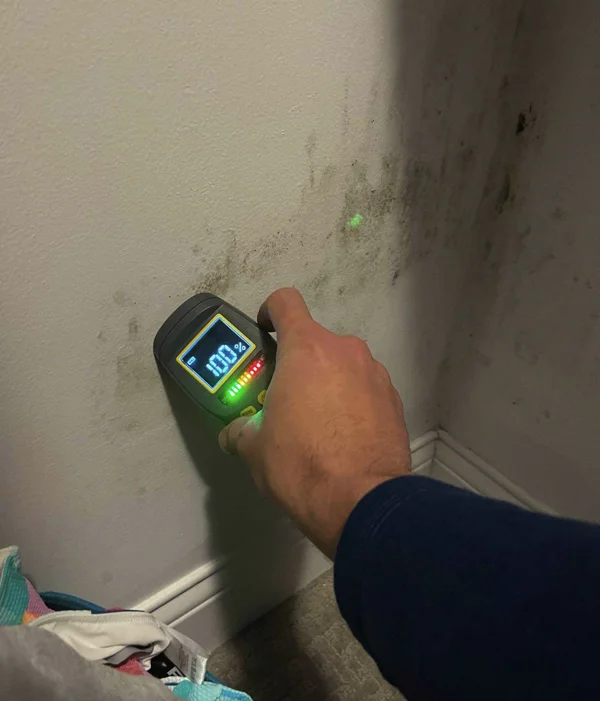
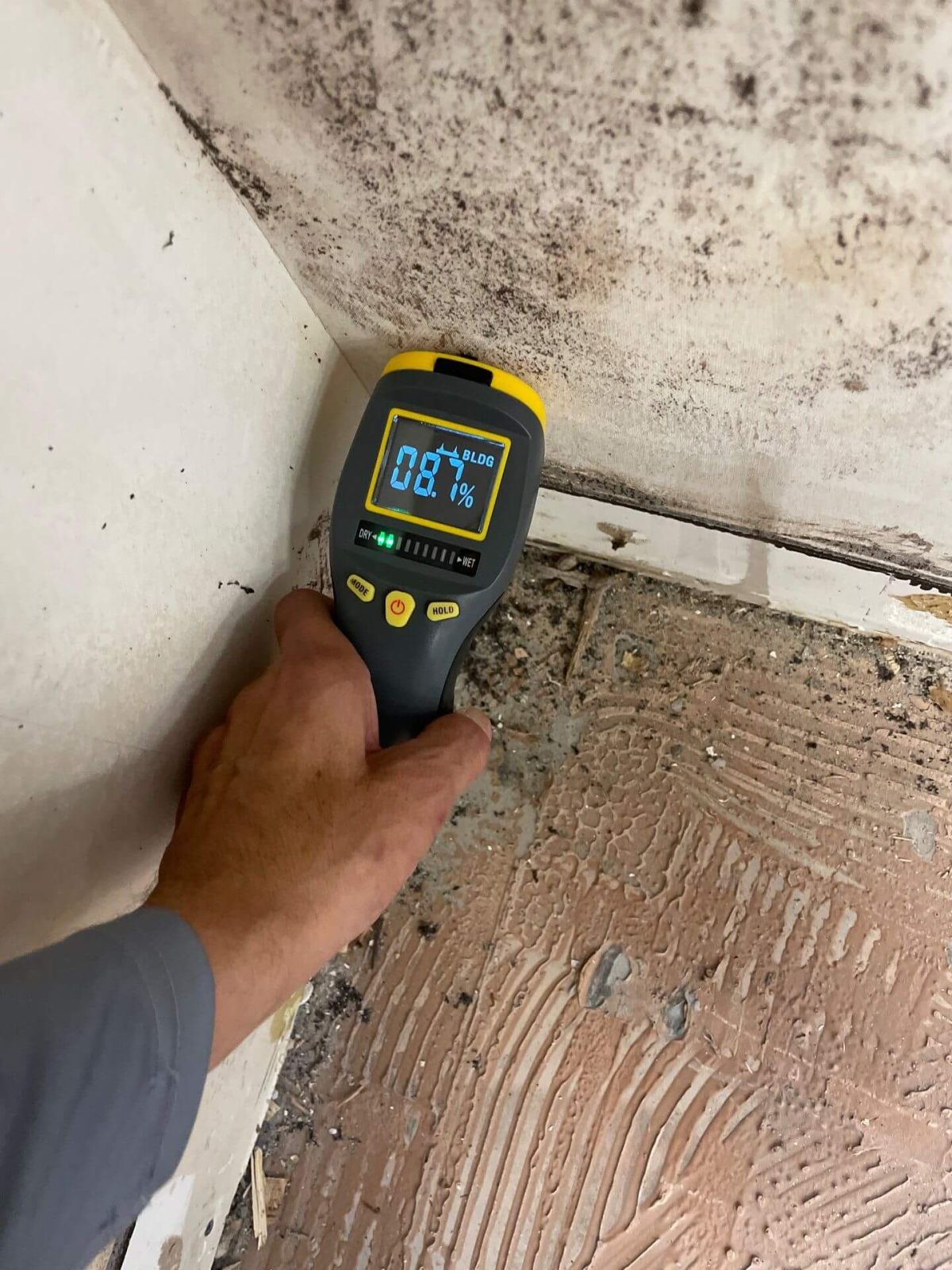
The worst versions of this show up with a “free mold test,” wave a meter around, point at a reading you can’t interpret, and hand you a grim verdict on the spot. A legitimate inspection can absolutely be free, but it should come with evidence you can actually see: lab results, photos, moisture readings, and a plain explanation of what they mean.
If the only proof on offer is the inspector’s worried face and a number on a device you can’t read, that’s a sales pitch dressed up as a diagnosis.
Scare tactics about ‘toxic black mold’ and immediate health danger
Mold can affect your health, and that’s worth taking seriously. Scammers, though, take that real concern and crank it to a ten.
They lean hard on the phrase “toxic black mold,” warn you about immediate danger to your kids or your lungs, and build a sense that you have to act today or gamble with your family’s safety. The fear does the selling for them, because a frightened homeowner stops comparing prices and starts writing checks.
For context, “toxic black mold” is more of a media phrase than a precise medical category, and most mold issues are a problem to fix on a normal timeline, not an emergency to panic over. A trustworthy company gives you honest, measured information about what they found and what it means, minus the doom.
When a company’s opening move is to scare you, notice that the fear is working in their favor and not yours.
Pressure to sign today and one-day-only pricing
Urgency is a scammer’s favorite tool, because it shuts down your ability to think clearly. The classic version is a price that’s only good if you sign right now, a discount that disappears tomorrow, or a crew that “just happens to be in your area today.” All of it is engineered to stop you from doing the one thing that actually protects you, which is getting a second opinion.
Real mold problems develop over weeks and months. Outside of active flooding or sewage, taking a day or two to compare quotes will not change your situation. A reputable company knows that and gives you room to decide, putting the quote in writing and letting it stand while you think it over.
Anyone rushing you toward a signature is working on your panic instead of your mold.
High verbal quote with no written, itemized scope of work
A number said out loud in your living room isn’t worth much, because it can change the second the work begins. The flag here is a company that floats a big figure but won’t commit the details to paper: what they’re treating, what method they’re using, how much area is covered, what’s included, and what gets billed as an extra. Without that itemized scope, you have no way to compare bids, no way to hold them to the price, and no record if the final invoice comes in higher than promised.
Vague pricing also makes the old bait-and-switch easy, where the cost balloons once they’ve “found more than expected” behind the wall.
Insist on a written, itemized estimate before any work starts, every single time. A real company produces one as a matter of routine. Reluctance to write it down usually means they want to keep their options open at your expense.
Demanding full-payment upfront
A deposit is normal and expected. Asking for the entire cost before a single bit of work happens is not how legitimate contractors operate.
Full prepayment hands the company all the leverage and leaves you with none. Once they already have your money, your ability to insist on quality, completion, or a redo of sloppy work mostly evaporates. The ugliest version is the operator who collects the full amount, does a fraction of the job or none of it, and then stops answering the phone. A reasonable setup is a modest deposit to get on the schedule and cover materials, with the balance due once the work is finished and verified.
Pay by credit card whenever you can, since it gives you a way to dispute the charge if things go wrong. A company demanding everything upfront, especially in cash, is a strong cue to walk away.
No guarantee and no references
Confident companies stand behind their work, and they have a trail of customers happy to vouch for it. When a mold company can offer neither, the absence is the message.
A missing guarantee means that if the mold returns next month, fixing it lands back on you and your wallet all over again. No references, or only a fuzzy boast about “hundreds of happy customers” with nothing you can actually verify, suggests there aren’t many clean jobs to point at.
Ask for a written guarantee and read exactly what it covers and what voids it. Ask for recent references from jobs like yours, then actually call one or two. A solid company shares both without flinching, because they have nothing to hide and plenty to show off.
Resistance to independent clearance testing
Clearance testing is the final exam. After the work is done, an independent party re-tests the property to confirm the mold is back to normal levels. Not everyone does this, and for a lot of straightforward jobs you won’t feel the need to. But it’s the one step that can prove you got what you paid for.
If something feels off, if the company was pushy, or if you just want peace of mind before you close the book on it, hire your own assessor to check the work. You don’t need anyone’s permission, and you don’t need to justify it.
But make sure to pay attention to how a company reacts when you mention it. An honest one expects the question and has no problem with a second set of eyes. A sketchy one gets defensive, calls it a waste of money, or insists their word is good enough. That hesitation tells you everything.
A company confident the mold is gone has no reason to fear someone else looking for it.
What questions should you ask before hiring a mold company?
Most people hire a mold company the same way they’d hire a plumber: get a name, get a price, say yes or no. The trouble is that mold work is mostly invisible. You can’t see what’s behind the wall, you can’t watch the spores, and once the drywall goes back up you usually can’t tell careful work from a rush job.
That makes you the only real check on the process, and these questions are how you run that check. A good company answers all of them without flinching.
- Are you licensed and insured, and can I see proof? Ask for a certificate of insurance and any industry certification (IICRC is the standard). A real company hands this over in minutes.
- Will I get a written, itemized scope of work before anything starts? You want the plan and the price on paper, not a number said out loud in your kitchen.
- Who actually analyzes the mold samples? The answer you want is an independent, accredited lab, not the company’s own back office. It keeps whoever profits from the work from also grading it.
- How do you determine I have a mold problem in the first place? Look for data and lab results, not a flashlight and a worried expression.
- How will you find and fix the source of the moisture? This is the one most people skip. Kill the mold but leave the leak, and it comes right back. If they only talk about removal and never about the cause, keep looking.
- What removal method do you use, and why that one? You’re not grading the chemistry. You’re listening for a straight, confident explanation versus a vague “we use a special process” that dodges the question.
- Do you re-test after the work, and will I get documentation? A before-and-after gives you proof instead of a promise.
- Are you okay with me hiring my own assessor to verify the cleanup? The right answer is yes, easily. Hesitation here is a flag all by itself.
- What does your guarantee actually cover, and what voids it? Get specific. A guarantee that quietly excludes the most likely problems isn’t worth much.
- When do you expect payment? A reasonable deposit is normal. Demanding the full amount before work begins is not.
- Can I see references or reviews from jobs like mine? Recent, relevant, and verifiable beats a wall of five-star quotes with no context.
What should you do if you’ve already been scammed?
If you think you’ve been taken, act quickly, because some of your options have deadlines. Start by writing down everything while it’s fresh: dates, names, what you were told, what you paid, and what was actually done. Save every text, email, invoice, and quote.
Then work through these, roughly in order:
- Go back to the company in writing first. State the problem and what you want done about it. Keep it factual. Sometimes this alone fixes it, and either way you’ve now documented that you gave them a chance.
- Dispute the charge with your credit card company. If you paid by card, you may be able to reverse the charge for work that was misrepresented or never completed. This is time-sensitive, so don’t sit on it.
- File a complaint with your state’s contractor licensing board or attorney general. Most states have a consumer protection division that investigates exactly this. These complaints also become part of the public record other homeowners can find.
- Report it to the Better Business Bureau. It creates a paper trail, and a pattern of BBB complaints is often what finally catches up with a bad operator.
- Get an independent assessment of the work. A reputable second company or a third-party assessor can document what was done wrong or left undone. That report strengthens every complaint above and tells you what still needs fixing.
The hard truth is that recovery isn’t guaranteed once the money’s gone, which is the whole reason the warning signs earlier in this article matter so much. The best protection against a mold scam is spotting it before you sign.
Get a Straight Answer About Your Mold Problem
If you’re staring at a mold problem right now and just want a straight answer, that’s a reasonable place to start: Pur360 offers an honest assessment, a written estimate, and no scare tactics.