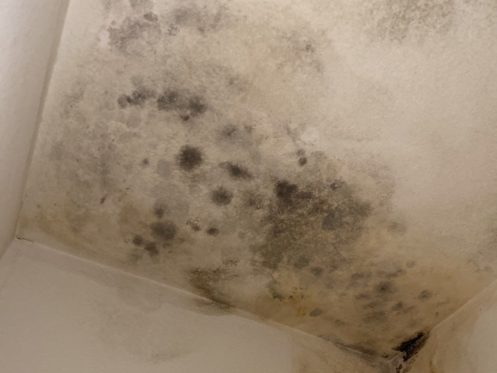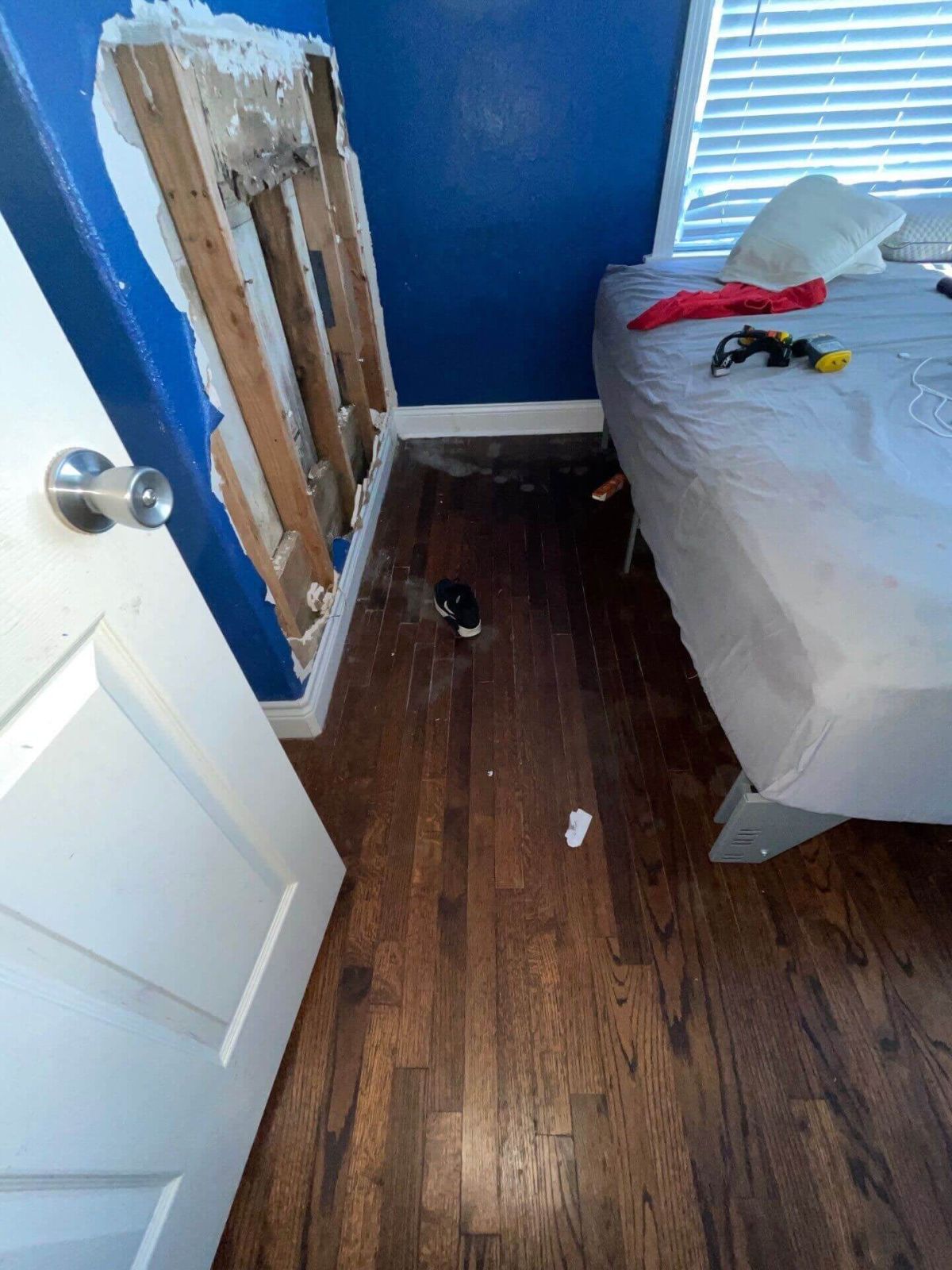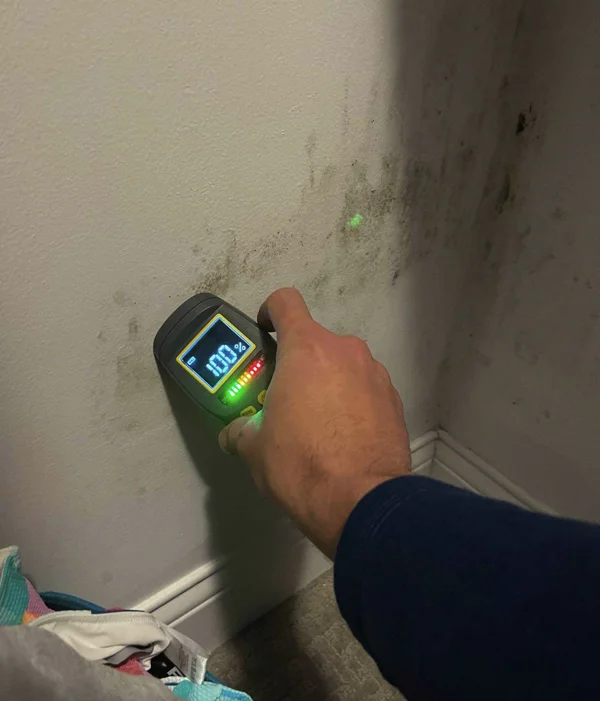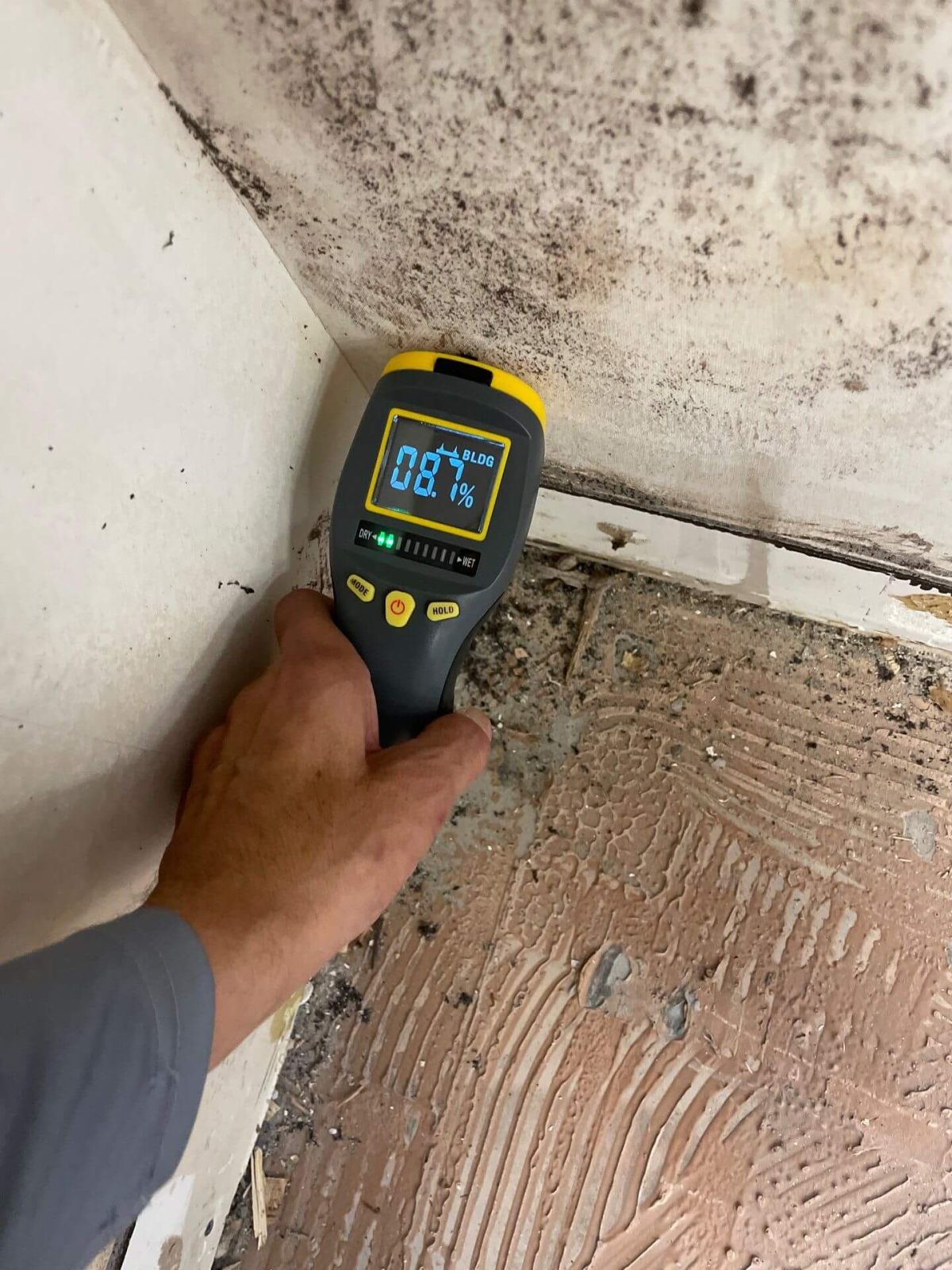

Quick Answer: Often, you DO NOT need to tear out drywall for mold remediation. Demolition isn’t automatic. Drywall and other porous materials only need to come out when they’re saturated, structurally damaged, or heavily contaminated. When the material is intact and dried, the mold can frequently be treated in place instead. Tearing out drywall should be the last step after the moisture source is fixed, not the default first move.
Finding mold in your home is stressful enough on its own. Then a contractor walks through, starts talking about opening up walls, hauling out drywall, and tarping off rooms, and a mold problem quietly turns into a renovation you didn’t budget for.
In a lot of cases the demolition and rebuild cost more than the mold treatment itself, on top of the days or weeks of living around a torn-up house.
So, it’s worth asking the plain question before any of that gets started: do the walls actually have to come out?
The answer depends on what’s going on behind them, and more often than homeowners expect, it’s no. This guide covers when demolition is genuinely necessary, when mold can be treated without tearing your house apart, and how to tell which situation you’re in before anyone picks up a saw.
Does mold remediation always require demolition?
No, not always. A lot of homeowners assume that a mold problem automatically means crews, plastic sheeting, and a dumpster full of their walls in the driveway. Sometimes it does come to that. Plenty of times (thankfully!) it doesn’t.
It helps to be clear on what remediation is actually trying to accomplish. The job is to get rid of the mold contamination and fix the moisture that let it grow in the first place. Tearing out material is one way to get there, and for badly damaged surfaces it’s the right call. But removal is a tool, not the goal. The goal is a clean, dry house that stays that way.
This matters because the industry standard for mold work, IICRC S520, is built around removing the contamination and correcting the moisture source, not around demolishing as much as possible. When a wall is intact and the damage is surface-level, there’s often a path that doesn’t involve ripping it open.
The rest of this guide walks through which situation you’re likely in.
Why do so many companies tear out drywall by default?
There are honest reasons and there are less honest ones, and it’s worth knowing both.
The honest reasons are real. Drywall is porous, so when it gets saturated and stays wet, mold can work its way into the core where a surface cleaning won’t reach. Disturbing heavy growth can also kick spores into the air, so in serious cases controlled removal is genuinely the safer, more thorough fix. If a material is structurally shot, no treatment is going to bring it back, and it has to go.
The less honest reason is money. Demolition plus rebuild is billable work, often a lot of it, and tearing everything out is also the path of least liability for the contractor. If they remove the wall, nobody can come back later and say they missed a spot behind it. That incentive is exactly why “we’ll have to open up these walls” gets said more often than it needs to be.
None of this means demolition is a scam. It means you’re allowed to ask whether it’s actually necessary in your case, and a good company will have a real answer.
“Tearing out a wall is the easy answer for the contractor, but not always the right one for the homeowner,” said Zak Khoshbin, President of Pur360. “Our first question is never how much can we remove. It’s how much can we save and still do the job right.”
When is demolition actually necessary?
Being straight about this is the whole point, because a company that claims it can save every wall every time isn’t being honest with you. Sometimes material has to come out:
Structurally compromised or crumbling drywall
If the drywall is soft, sagging, swollen, or falling apart in your hand, it’s done. At that stage you’re not deciding whether to clean it, you’re deciding what to replace it with. No treatment restores material that’s already lost its integrity.
Long-term saturation or contaminated (Category 3) water
Drywall that’s been wet for a long stretch, or that got soaked by sewage or floodwater, falls into what the industry calls Category 3, the dirtiest water class. That material is both saturated through and contaminated with things you don’t want in your home. Removal is the standard response, and it’s the right one.
Mold inside insulation that can’t be salvaged
Mold loves the inside of wall cavities, and contaminated insulation generally can’t be cleaned and reused in a way you’d trust. When growth has gotten into the insulation, that portion typically comes out so the cavity can be properly dried and treated.
Heavy, widespread contamination behind the walls
A small mold spot is one thing. Extensive colonization spread across a large area, especially hidden behind the surface where it’s been growing undisturbed, is a whole other thing. When the contamination is that significant, controlled removal is often the only way to be confident it’s fully addressed.
When can mold be treated without tearing out the wall?
Now the other side, because plenty of mold problems don’t fall into the categories above. When the material is still sound, there’s frequently a way to treat it in place and keep your wall where it is.
Intact, dried drywall
If the drywall is solid and has been dried out, and the growth hasn’t destroyed the material, it’s a strong candidate for in-place treatment rather than removal. Sound material that can be cleaned and treated doesn’t automatically need to be cut out just because mold touched it.
Surface and airborne contamination
A great deal of what makes a home feel “moldy” is mold on surfaces and spores in the air, not deep structural rot. Contamination at that level can often be handled by treating the surfaces and the air itself rather than removing the materials they’re attached to.
When the moisture source is already fixed
This one is the quiet key to the whole thing. Mold needs moisture to live. Once the leak, the humidity, or the standing water that fed it has been corrected, the problem stops actively spreading, and treating what’s there in place becomes far more realistic. Skip the moisture fix and no amount of demolition will keep it from coming back.
This is where Pur360’s approach fits in, and it’s worth explaining plainly rather than selling it.
Our process is a patented, chemical-free treatment designed to penetrate porous materials and reach mold on surfaces, inside furnishings, in ductwork, and in the air, without tearing the house apart to get to it. That’s why, when a wall is intact and the moisture source has been handled, this kind of method can sometimes save material that a demolition-first approach would have hauled to the curb.
How do you know which situation you’re in?
You usually can’t tell by looking, and neither can a contractor standing in your hallway making a quick judgment. The honest answer comes from an actual assessment, and there are a handful of things that assessment is weighing:
How wet the material is, measured with a moisture meter rather than guessed. How far the growth extends, including what’s hidden behind the surface. What condition the material is in, meaning sound versus falling apart. And what kind of water was involved, since clean-water damage and sewage are not the same problem.
Put those together and you get a clear read on whether your walls can be treated or need to come out. The useful version of this happens before anyone swings a hammer, not after they’ve already started opening things up. If a company can’t explain which bucket your situation falls into and why, that’s worth pausing on. The decision should be based on what’s actually in your walls, and you’re entitled to see the reasoning.
See What Your Walls Actually Need
If you’re facing a mold problem and someone’s already told you the walls have to come out, it’s reasonable to want a second look before the demolition starts. An honest assessment tells you what genuinely needs to be removed and what can be saved.